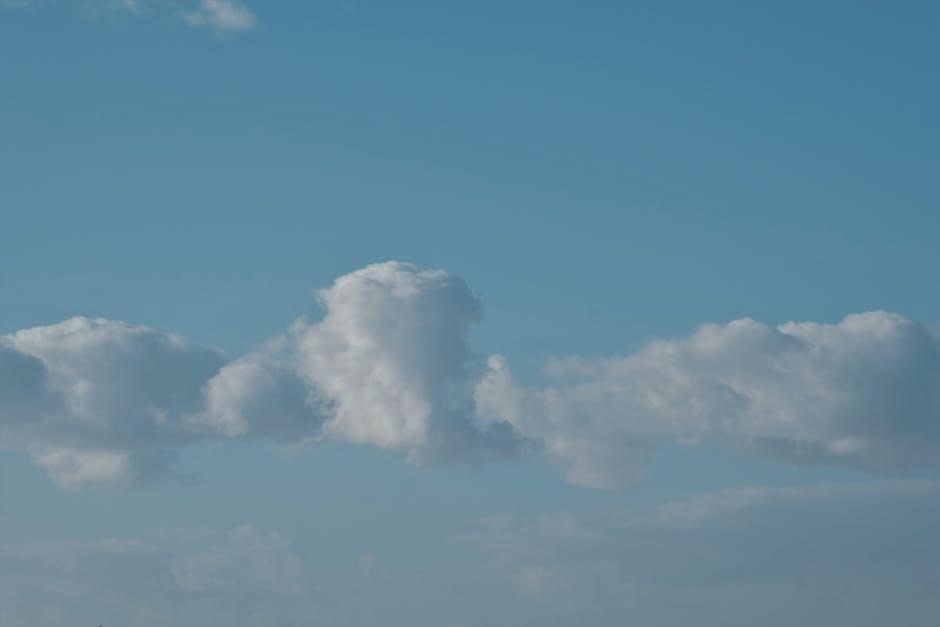
Cloudspotting, a delightful pastime, gains traction with resources like Gavin Pretor-Pinney’s guides and the Cloud Appreciation Society’s influence.
These publications, alongside illustrated field guides, foster a deeper understanding and appreciation for atmospheric wonders.
From identifying formations to predicting weather, cloudspotting blends science, art, and a connection to the natural world.
What is Cloudspotting?
Cloudspotting, at its heart, is the simple yet profound act of observing clouds and recognizing their beauty and variety. It’s more than just looking up; it’s about actively engaging with the atmosphere and developing an understanding of the stories the clouds tell.
Gavin Pretor-Pinney, founder of the Cloud Appreciation Society and author of The Cloudspotter’s Guide and Cloudspotting for Beginners, has been instrumental in popularizing this pursuit. His work emphasizes that cloudspotting isn’t a scientific endeavor requiring specialized equipment, but rather an accessible hobby for anyone with a curious mind.
Resources like Know Your Clouds and The Pocket Cloud Book further demystify the skies, offering practical guidance on identifying different cloud types – from the wispy cirrus to the towering cumulonimbus. These guides often link cloud formations to weather patterns, allowing enthusiasts to make informed predictions.
Ultimately, cloudspotting is a mindful practice, encouraging us to slow down, observe, and appreciate the ever-changing canvas above. It’s a gateway to understanding atmospheric science and a source of endless fascination.
The Appeal of Cloudwatching
The enduring appeal of cloudwatching lies in its accessibility and inherent beauty. Unlike many hobbies, it requires no specialized equipment or significant financial investment – just a clear sky and a willingness to look up. This simplicity is a key factor in its growing popularity, fueled by resources like Gavin Pretor-Pinney’s guides.
Furthermore, clouds offer a constantly shifting spectacle, providing endless visual variety. Each formation is unique, shaped by atmospheric conditions and offering a fleeting moment of artistry. This ephemeral nature adds to their allure, encouraging mindful observation.
The act of cloudspotting also taps into a deeper human desire for pattern recognition and storytelling; Identifying cloud types – as detailed in guides like Know Your Clouds – provides a sense of order and understanding.
Beyond the aesthetic and intellectual benefits, cloudwatching offers a calming escape from the stresses of modern life, fostering a connection with the natural world.
A Brief History of Cloud Observation
Formal cloud observation, while a recent formalized pursuit, has roots stretching back centuries. However, the modern classification system began to take shape in the early 19th century with Luke Howard, an amateur meteorologist. His work, aided by Goethe’s influence, laid the groundwork for understanding cloud formations.
Howard meticulously categorized clouds, assigning Latin names that are still used today – Cirrus, Cumulus, Stratus, and Nimbus. This system provided a common language for describing and studying these atmospheric phenomena, as highlighted in resources like Cloudspotting for Beginners.
Later, Rachel Carson’s lyrical prose further popularized cloud observation, connecting scientific understanding with poetic appreciation.
The 21st century witnessed a resurgence of interest, largely due to Gavin Pretor-Pinney’s founding of the Cloud Appreciation Society and his accessible guides, like The Cloudspotters Guide, democratizing cloud knowledge and fostering a global community of enthusiasts.
The Science of Clouds
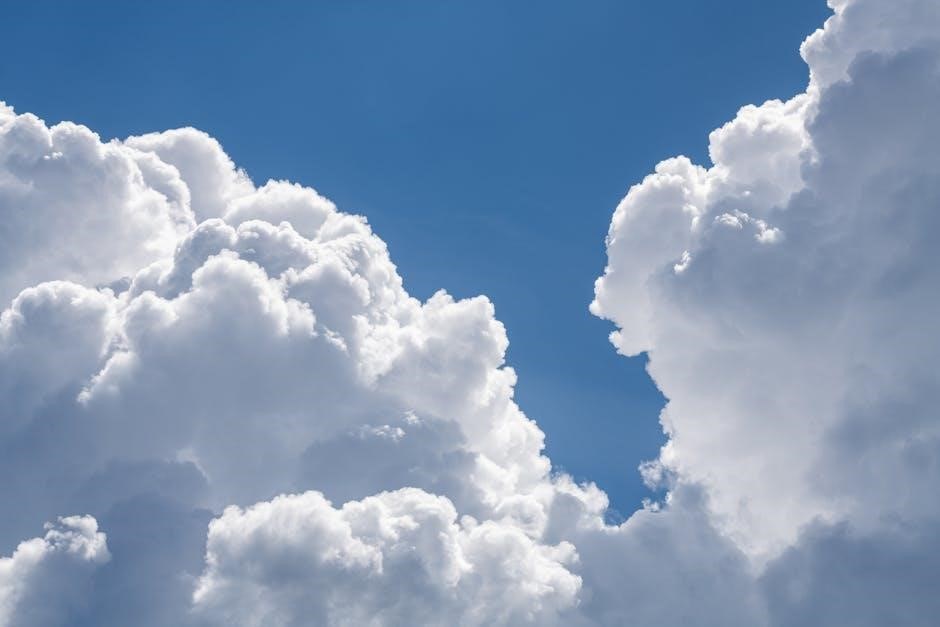
Understanding cloud formation involves water vapor, temperature, and atmospheric pressure, as detailed in field guides and resources for aspiring cloudspotters.
These guides explain the processes behind these beautiful, ever-changing atmospheric displays.
Cloud Formation: The Basics
Clouds begin their journey with water vapor, an invisible gas rising into the atmosphere through evaporation from bodies of water, plants (transpiration), and even the ground.
As this moist air ascends, it encounters lower atmospheric pressure and cooler temperatures. This cooling is crucial, as cooler air holds less moisture than warm air.
Consequently, the water vapor begins to condense – changing from a gas to a liquid state.
However, condensation doesn’t happen spontaneously; it requires tiny particles called condensation nuclei.

These nuclei, such as dust, pollen, salt, and smoke, provide a surface for water vapor to condense upon.
Millions of these microscopic water droplets or ice crystals cluster together, becoming visible as clouds.
Different atmospheric conditions and altitudes influence the type of cloud formed, leading to the diverse range of cloud classifications that cloudspotters learn to identify.
Guides like those by Gavin Pretor-Pinney detail these processes, helping enthusiasts understand the fundamental science behind these atmospheric phenomena.
Ultimately, cloud formation is a beautiful demonstration of physics in action, readily observable in the sky above.
The Role of Water Vapor and Temperature

Water vapor is the fundamental ingredient in cloud formation, constantly present in the atmosphere due to evaporation from Earth’s surfaces.
Its concentration varies significantly based on location and weather conditions, directly impacting the potential for cloud development.
Temperature plays a critical role, as warmer air can hold substantially more water vapor than colder air.
As air rises and cools, its capacity to retain moisture decreases, leading to condensation.
This cooling process can occur through several mechanisms, including adiabatic cooling – where air cools as it expands due to lower pressure at higher altitudes.
The dew point, the temperature at which air becomes saturated, is a key indicator of cloud formation potential.
When air reaches its dew point, condensation begins, forming cloud droplets or ice crystals.
Understanding the interplay between water vapor and temperature is essential for cloudspotters, as it explains why certain cloud types form under specific atmospheric conditions.
Resources like field guides detail these relationships, enabling accurate cloud identification and weather prediction.
Atmospheric Pressure and Cloud Development
Atmospheric pressure, the weight of air above a given point, profoundly influences cloud formation and development.
Decreasing pressure, typically associated with rising air, allows for expansion and subsequent cooling – a crucial step in condensation.
Low-pressure systems are often linked to unsettled weather and the formation of clouds, including those associated with precipitation.
Conversely, high-pressure systems generally suppress cloud development due to descending air, which warms and inhibits condensation.
Air rises in low-pressure zones due to convergence, orographic lift (air forced upwards by mountains), or frontal lifting.
This upward movement cools the air, leading to water vapor condensing into cloud droplets or ice crystals.
The type of cloud formed depends on the stability of the atmosphere and the amount of moisture present.
Cloudspotters benefit from understanding pressure systems, as they provide context for predicting cloud types and potential weather changes.
Guides and resources often illustrate how pressure gradients and air masses contribute to specific cloud formations.
Cloud Classification: A Detailed Guide
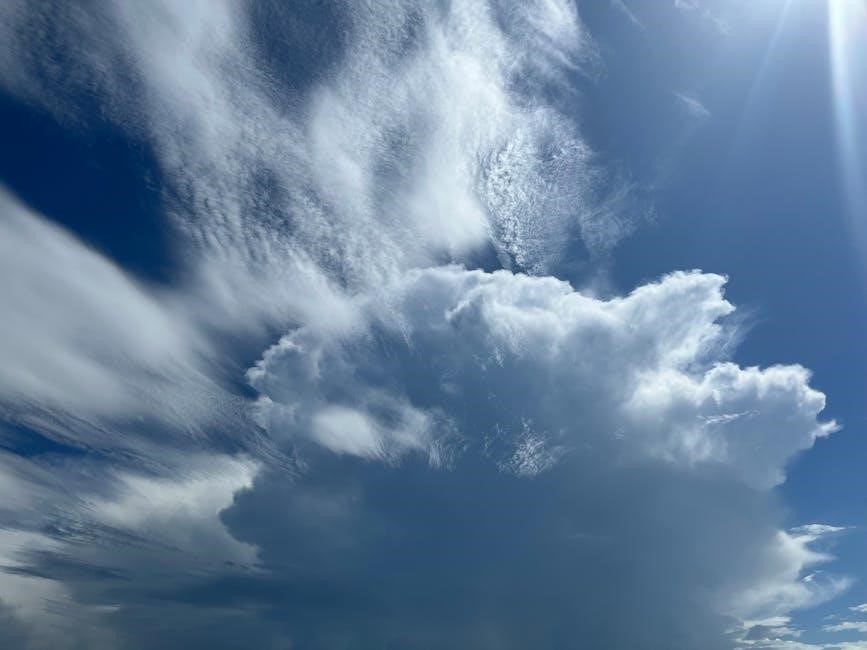
Cloudspotters utilize classification systems—high, mid, and low-level—to identify formations like cirrus, altocumulus, and stratus, as detailed in guides.
Understanding these categories, alongside resources from the Met Office, enhances observation and prediction skills.
High-Level Clouds (Cirrus, Cirrocumulus, Cirrostratus)
High-level clouds, forming above 20,000 feet, are primarily composed of ice crystals due to the frigid temperatures at those altitudes. Cirrus clouds are delicate, wispy formations often appearing as feathery streaks across the blue sky, frequently indicating a change in weather is approaching.
Cirrocumulus clouds present as small, white patches arranged in regular patterns, sometimes resembling ripples or grains – often described as a “mackerel sky”. Cirrostratus clouds are thin, sheet-like and can cause a halo effect around the sun or moon, a beautiful optical phenomenon frequently documented by cloudspotters.
Guides emphasize that identifying these clouds requires careful observation of their shape, texture, and altitude. Pretor-Pinney’s work and resources from organizations like the Met Office provide detailed descriptions and imagery to aid in accurate classification, helping enthusiasts deepen their understanding of atmospheric processes and predictive capabilities.
Mid-Level Clouds (Altocumulus, Altostratus)
Mid-level clouds typically reside between 6,500 and 20,000 feet, composed of water droplets and ice crystals. Altocumulus clouds appear as patchy, sheet-like formations, often arranged in layers or rounded masses; they can signal potential thunderstorms later in the day, according to cloudspotting guides.
Altostratus clouds are greyish or bluish-grey sheets covering the entire sky, often allowing a dimly visible sun or moon to shine through – appearing as if viewed through frosted glass. Distinguishing them from cirrostratus requires observing the lack of a halo effect.
Resources like “Know Your Clouds” and Pretor-Pinney’s publications stress the importance of noting cloud height and composition for accurate identification. Smartphone photography, coupled with cloud charts, assists beginners in documenting and learning these fascinating atmospheric features, enhancing their cloudspotting skills.
Low-Level Clouds (Stratus, Stratocumulus, Nimbostratus)
Low-level clouds, forming below 6,500 feet, significantly impact daily weather conditions. Stratus clouds appear as grey, uniform sheets, often resembling fog that doesn’t reach the ground; they can bring drizzle or light snow. Stratocumulus clouds are low, lumpy layers, often covering the entire sky, but with discernible rounded masses or rolls.
Nimbostratus clouds are dark, grey, and rain-producing – associated with prolonged precipitation. Guides emphasize that identifying these clouds involves observing their height, shape, and associated weather. The “Pocket Cloud Book” and similar resources provide detailed descriptions and visual aids.
Utilizing a field guide and smartphone photography allows cloudspotters to document these formations and improve their observational skills. Understanding these cloud types is crucial for basic weather forecasting, as highlighted in various cloudspotting resources.
Unique and Dramatic Cloud Types
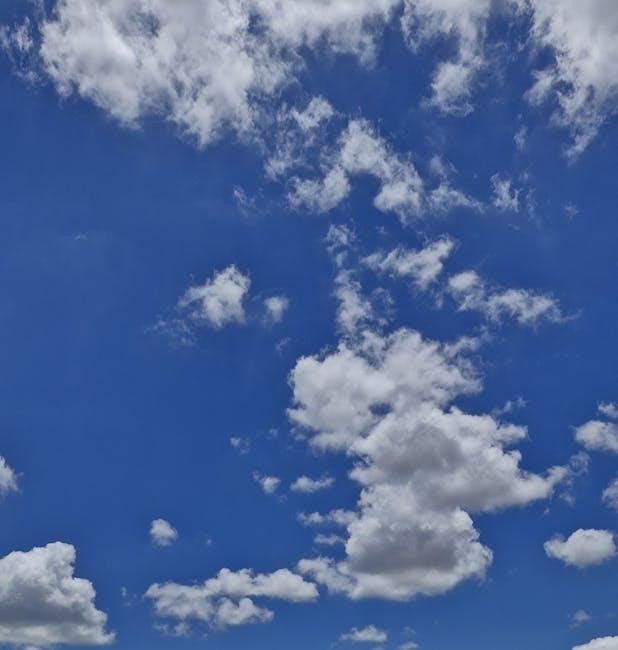
Cloudspotting guides reveal spectacular formations like cumulonimbus, lenticular, and mammatus clouds, captivating observers with their unusual shapes and atmospheric power.
These dramatic displays showcase nature’s artistry, inspiring awe and fueling a deeper curiosity about meteorological phenomena.
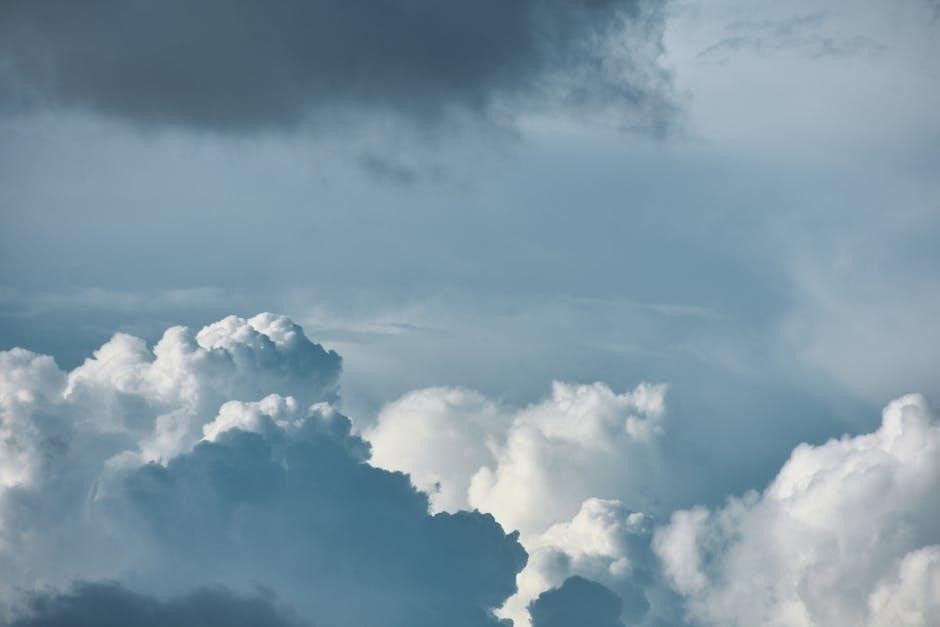
Cumulus Clouds: The Fluffy White Clouds
Cumulus clouds, often described as “fair-weather clouds,” are among the most recognizable and beloved cloud types, frequently featured in cloudspotting guides and resources.
Characterized by their distinct, puffy, cotton-like appearance with flat bases, these clouds develop through convection – warm, moist air rising and cooling.
They typically form on sunny days, appearing as isolated clouds with well-defined edges, though they can also group together.
Cloudspotters learn to distinguish cumulus clouds based on their size and vertical development; smaller cumulus indicate stable atmospheric conditions.
However, larger, towering cumulus clouds can signal potential for showers or even thunderstorms, demonstrating the dynamic nature of the atmosphere.
Guides often emphasize observing how cumulus clouds change throughout the day, reflecting shifts in temperature and humidity.
Their bright white color comes from sunlight reflecting off water droplets, creating a visually stunning spectacle in the sky.
For beginner cloudspotters, cumulus clouds provide an excellent starting point for learning cloud identification and understanding basic weather patterns.
Cumulonimbus Clouds: Thunderstorm Giants
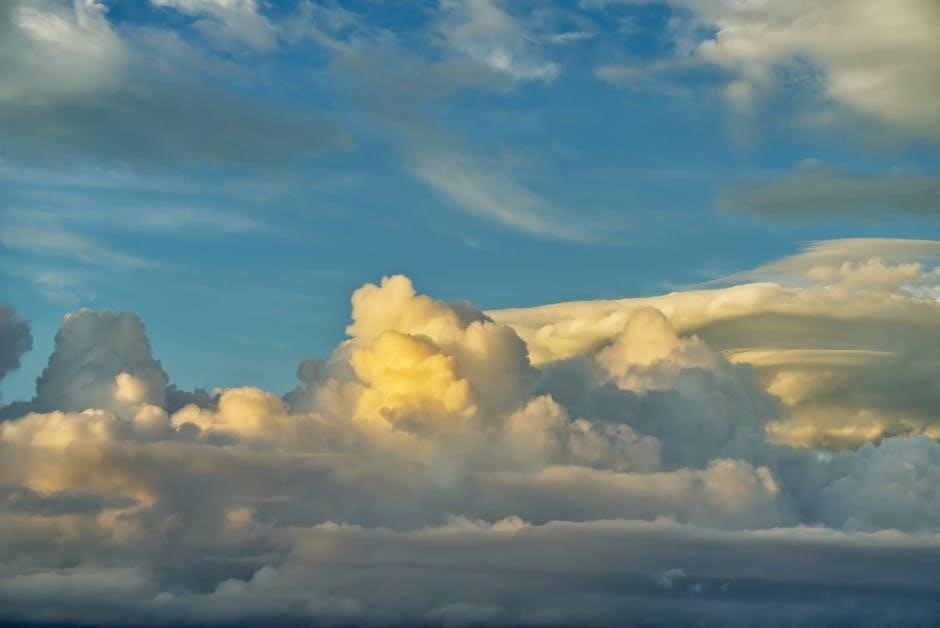
Cumulonimbus clouds, the imposing thunderstorm giants, are a focal point in any comprehensive cloudspotters guide due to their dramatic appearance and associated weather.
These massive, vertically developed clouds can stretch throughout the troposphere, often reaching altitudes of over 12,000 meters (39,000 feet).
Recognizable by their dark, ominous bases and towering, anvil-shaped tops, cumulonimbus clouds signify intense atmospheric instability.
Cloudspotting resources emphasize the dangers associated with these clouds, as they produce heavy rain, hail, lightning, and even tornadoes.
Guides instruct observers to look for features like mammatus clouds – pouch-like formations hanging from the underside – as indicators of severe weather.
The anvil shape forms as the rising air reaches the stable stratosphere and spreads horizontally.
Understanding cumulonimbus formation is crucial for weather prediction and safety, making them a key study area for enthusiasts.
Experienced cloudspotters can often anticipate thunderstorm development by observing the growth and evolution of these powerful clouds.
Lenticular Clouds: The Lens-Shaped Wonders
Lenticular clouds, often described as lens-shaped or almond-shaped, are a captivating sight for cloudspotters and are prominently featured in guides.
Forming when stable, moist air flows over mountains or hills, these clouds remain stationary despite strong winds, creating a striking visual effect.
Cloudspotting resources explain that lenticular clouds form as air rises and cools on the windward side of the terrain, then descends and warms on the leeward side.
This process creates standing waves in the atmosphere, and lenticular clouds form at the crests of these waves.
Often mistaken for UFOs due to their smooth, saucer-like appearance, lenticular clouds are a testament to atmospheric dynamics.
Guides emphasize that while beautiful, lenticular clouds can indicate turbulence, posing a hazard to aircraft.
Identifying these unique formations requires understanding orographic lift and atmospheric stability.
Experienced cloudspotters appreciate the subtle variations in lenticular cloud shapes and formations, revealing atmospheric conditions.
Mammatus Clouds: Pouch-Like Formations
Mammatus clouds are among the most visually striking and often unsettling cloud formations, frequently detailed in cloudspotters’ guides.
Characterized by their distinctive pouch-like protrusions hanging from the underside of a cloud – typically cumulonimbus – they create a dramatic and somewhat ominous appearance.
Cloudspotting resources explain that mammatus clouds form due to sinking air within the cloud, creating these bulging, downward-extending shapes.
While often associated with severe thunderstorms, mammatus clouds themselves don’t necessarily indicate imminent danger, but often accompany them.
Guides emphasize observing the parent cloud; if it’s a powerful cumulonimbus, caution is advised.
The name “mammatus” comes from the Latin “mamma,” meaning “udder” or “breast,” aptly describing their appearance.
Spotting mammatus clouds requires looking beneath the anvil of a thunderstorm, often during sunset when the light accentuates their form;
These formations are a reminder of the powerful forces at play within the atmosphere, captivating cloud enthusiasts worldwide.
Cloudspotting Tools and Techniques
Cloudspotting benefits from simple tools like charts, guides, and smartphones for photography, as highlighted in resources like the Cloudspotters Guide.
These aids enhance identification and documentation of diverse cloud formations for enthusiasts.
Essential Equipment (Optional)
While cloudspotting is wonderfully accessible – requiring nothing more than your eyes and a patch of sky – certain tools can elevate the experience. A dedicated cloud chart or guidebook, such as those referenced in the Cloudspotters Guide, is immensely helpful for accurate identification. These charts visually categorize cloud types, aiding in distinguishing between cirrus, cumulus, and stratus formations.
For those inclined towards photographic documentation, a smartphone with a decent camera is sufficient. Many modern smartphones offer features that enhance sky photography, capturing the subtle nuances of cloudscapes. However, a more advanced camera with a zoom lens can reveal intricate details. Binoculars can also be useful for observing distant cloud formations and appreciating their textures.
Ultimately, specialized equipment isn’t essential; the joy of cloudspotting lies in mindful observation. However, these optional tools can deepen your understanding and allow you to share your discoveries with others, fostering a greater appreciation for the beauty and complexity of the atmosphere.
Using Cloud Charts and Guides
Cloud charts and guides, like those featured in “Know Your Clouds” and Gavin Pretor-Pinney’s works, are invaluable resources for aspiring cloudspotters. These tools provide a systematic approach to cloud identification, moving beyond subjective descriptions to a more scientific understanding. They typically categorize clouds based on altitude – high, mid, and low-level – and their general appearance, such as cirrus, cumulus, and stratus.
Effective use involves comparing observed clouds to the illustrations and descriptions within the guide. Pay attention to key characteristics: shape, color, texture, and altitude. Note whether the clouds are layered or puffy, wispy or dense. Understanding the terminology – like ‘mammatus’ or ‘lenticular’ – unlocks a deeper appreciation for cloud diversity.
Regular practice with a cloud chart enhances observational skills, allowing for quicker and more accurate identification. It transforms casual sky-gazing into an informed and engaging pursuit, connecting you to the atmospheric processes unfolding above.
Smartphone Photography for Cloudspotters
Modern smartphones have become powerful tools for cloudspotters, enabling easy documentation and sharing of observations. Guides like “Cloudspotting for Beginners” emphasize capturing stunning photos using only a smartphone, eliminating the need for specialized equipment.
Key techniques include utilizing the phone’s gridlines to compose shots, focusing on interesting cloud formations, and adjusting exposure to capture detail without washing out the sky. Experiment with different angles and perspectives to highlight the cloud’s unique features. Utilizing the panoramic mode can capture expansive cloudscapes.
Post-processing apps can enhance photos, adjusting brightness, contrast, and saturation. Sharing images online, perhaps with the Cloud Appreciation Society, fosters a community and allows for collaborative learning; Smartphone photography transforms cloudspotting into a visually rich and shareable experience.
The Cultural Significance of Clouds
Clouds permeate art, literature, and mythology, inspiring creativity and wonder for centuries, as noted in resources like The Marginalian’s exploration of cloud depictions.
The Cloud Appreciation Society embodies this enduring fascination, fostering a community around appreciating these atmospheric phenomena;
Clouds in Art and Literature
Throughout history, clouds have served as potent symbols and captivating subjects within artistic and literary realms. Their ever-shifting forms lend themselves to interpretations of ephemerality, dreams, and the sublime. Artists have long sought to capture their ethereal beauty, from the delicate washes of J.M.W. Turner’s landscapes to the dramatic skies of Romantic paintings.
Literary works also frequently employ clouds as metaphorical devices. They can represent hope, sorrow, or the vastness of the unknown. Consider the evocative descriptions found in poetry and prose, where clouds mirror the emotional states of characters or symbolize larger thematic concerns.
The influence extends to modern works, with authors and artists continuing to draw inspiration from the sky’s dynamic displays. Resources like those highlighted – Pretor-Pinney’s guides and the Cloud Appreciation Society – encourage a mindful observation that deepens our connection to these culturally significant formations, fostering a renewed appreciation for their artistic and literary power.
Clouds in Mythology and Folklore
Across diverse cultures, clouds occupy a prominent place in mythology and folklore, often perceived as the dwelling places of deities or manifestations of supernatural forces. In Greek mythology, clouds were associated with the gods, serving as veils or pathways to the heavens. Similarly, many indigenous cultures view clouds as sacred entities, imbued with spiritual significance and connected to weather spirits.
Folklore is replete with tales interpreting cloud formations as omens or messages from the divine. Specific cloud types might foretell storms, good harvests, or other significant events. These beliefs reflect a deep-rooted human attempt to understand and connect with the natural world, attributing meaning to the sky’s ever-changing canvas.
Resources like the Cloudspotters Guide and the Cloud Appreciation Society encourage a modern appreciation, yet acknowledge this rich historical context, bridging scientific understanding with the enduring power of myth and legend.
The Cloud Appreciation Society
Founded by Gavin Pretor-Pinney, author of “The Cloudspotters Guide,” the Cloud Appreciation Society (CAS) is a global community dedicated to the celebration of clouds. Established in 2005, the CAS fosters a shared enthusiasm for observing and appreciating the beauty and complexity of the sky.
Membership offers access to a vibrant network of cloud enthusiasts, opportunities to share observations and photographs, and a deeper understanding of cloud science. The Society actively promotes cloud appreciation through events, publications, and online platforms.
Pretor-Pinney’s work, alongside the CAS, has significantly popularized cloudspotting, transforming it from a niche hobby into a widespread pastime. The CAS embodies a playful yet informed approach, encouraging everyone to look up and marvel at the atmospheric wonders above, fostering a connection with nature and a sense of collective awe.