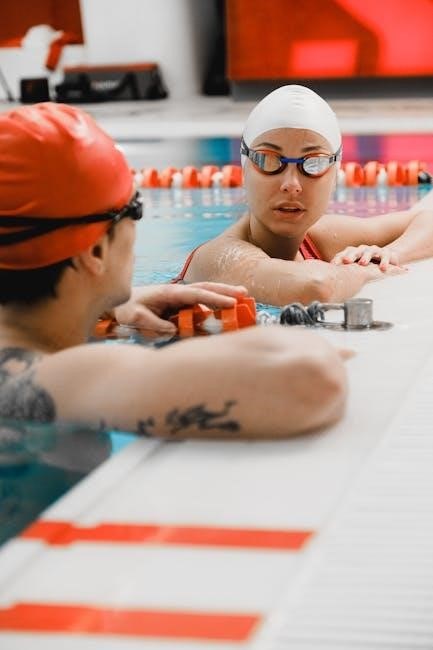
Embarking on an Olympic triathlon journey requires dedication! This 16-week plan, geared towards four weekly sessions (7-8 hours), prepares athletes for this challenging race.
What is an Olympic Triathlon?
The Olympic triathlon is a demanding multisport event featured in the Summer Olympic Games, testing athletes’ endurance and versatility. It consists of a 1.5-kilometer (0.93 miles) swim, followed by a 40-kilometer (24.8 miles) bike ride, and concluding with a 10-kilometer (6.2 miles) run. This specific distance format has been the standard since its inclusion in the Sydney 2000 Olympics.
Successfully completing an Olympic triathlon demands rigorous training across all three disciplines, alongside efficient transitions between them. A well-structured 16-week training plan, like the one we’ll explore, is crucial for building the necessary fitness and honing race-day strategies. It’s a test of complete athleticism, requiring dedication and a strategic approach to preparation.
Target Athlete Profile
This 16-week Olympic triathlon training plan is designed for the intermediate to advanced athlete. Ideally, you should already possess a base level of fitness in all three disciplines – swimming, cycling, and running. Prior experience with shorter-distance triathlons (Sprint or Standard) is highly beneficial.
The target athlete can comfortably swim 1500 meters, cycle 40 kilometers, and run 10 kilometers continuously, though not necessarily at race pace. A commitment of 7-8 hours per week for training is essential. Individuals should be injury-free and possess a strong work ethic, willing to consistently follow the structured plan. This plan isn’t for beginners; it builds upon existing fitness.
Importance of a Structured Training Plan
A well-defined, 16-week training plan is paramount for Olympic triathlon success. Random workouts won’t suffice; this distance demands a progressive, periodized approach. A structured plan systematically builds endurance, strength, and speed across all three disciplines, minimizing injury risk.
It incorporates key principles like progressive overload, specificity, and recovery, ensuring peak performance on race day. This plan balances training load, preventing overtraining and promoting adaptation. Following a plan provides accountability, tracks progress, and allows for necessary adjustments based on individual responses. Without structure, athletes risk burnout or inadequate preparation, hindering their potential.
Understanding the 16-Week Plan
This plan utilizes phased training, progressively increasing intensity and volume. It’s designed for athletes committing to approximately 7-8 hours of training weekly.
Plan Overview & Phases
The 16-week Olympic triathlon training plan is structured into four distinct phases, each building upon the previous one to maximize performance on race day. The initial phase (Weeks 1-4) focuses on establishing a solid base of fitness across all three disciplines – swim, bike, and run – with an emphasis on building endurance and consistency.
Phase two (Weeks 5-8) introduces more intensity through speed work and strength training, preparing the body for the demands of higher-level training. Weeks 9-12 mark the peak training phase, incorporating brick workouts to simulate race conditions and refine transitions.
Finally, the final phase (Weeks 13-16) is dedicated to tapering, reducing training volume to allow for recovery and ensure peak performance at the Olympic triathlon event.
Key Training Principles
Several core principles underpin this 16-week Olympic triathlon training plan. Progressive overload is crucial – gradually increasing training volume and intensity to continually challenge the body. Specificity ensures workouts directly mimic the demands of the race, focusing on Olympic distance requirements.
Periodization structures training into phases, optimizing performance and preventing plateaus. Recovery is paramount; adequate rest and nutrition are essential for adaptation and injury prevention.
Consistency is key – regular training, even during busy periods, maintains fitness gains. Finally, individualization acknowledges that each athlete is unique, requiring adjustments to the plan based on their fitness level, strengths, and weaknesses. Listening to your body and adapting accordingly is vital for success.
Required Equipment
Successfully completing this 16-week Olympic triathlon plan necessitates specific equipment. A road bike in good working order, fitted for optimal comfort and efficiency, is essential. A well-maintained wetsuit is crucial for open water swims, enhancing buoyancy and warmth. Running shoes suited to your gait and training surfaces are also vital.
A triathlon suit or separate cycling shorts and swim top will improve comfort during transitions and racing. A helmet is non-negotiable for bike sessions, prioritizing safety. Consider a GPS watch to track distance, pace, and heart rate.
Finally, basic repair tools for bike maintenance (pump, spare tube, multi-tool) are recommended for independent training.

Swim Training (Weeks 1-16)
Swim training progresses from building endurance to race-specific sets. Focus on technique, speed work, and gradually tapering volume as the competition nears.
Building Endurance (Weeks 1-4)
The initial four weeks prioritize establishing a solid swimming base. This phase focuses on increasing your continuous swimming distance and time in the water. Expect longer, slower-paced workouts, emphasizing proper form over speed. Include drills to improve stroke efficiency and body position. Aim for at least three swim sessions per week, gradually increasing the total weekly yardage. Don’t neglect pull sets with a pull buoy to isolate upper body strength and kick sets with a kickboard to build leg power.
Focus on consistent effort and building comfort in the water. This foundational endurance is crucial for handling the demands of later, more intense training phases. Remember to incorporate rest and recovery to prevent overtraining and allow your body to adapt.
Speed Work & Technique (Weeks 5-8)
Weeks five through eight shift the focus to enhancing swimming speed and refining technique. Introduce interval training with varying distances and rest periods to improve your lactate threshold and anaerobic capacity. Incorporate sprint sets to boost top-end speed. Continue drills, now emphasizing faster turnover and a more powerful pull. Pay close attention to your catch and release phases.
This phase requires a balance between speed and maintaining good form. Include at least two speed-focused swim sessions per week, alongside one endurance-based workout. Video analysis can be incredibly helpful for identifying and correcting technical flaws. Prioritize quality over quantity, ensuring each repetition is performed with intention.
Race-Specific Swim Sets (Weeks 9-12)
These weeks are crucial for simulating race-day conditions in the pool. Implement sets that mimic the open water swim start and the pace required for the Olympic distance. Practice sighting drills frequently, as this is vital in open water. Include sets with frequent turns, replicating the buoys encountered during a triathlon. Focus on maintaining a consistent pace throughout longer intervals, mirroring the demands of the race.
Introduce open water swimming if feasible, to acclimate to the conditions. Incorporate wetsuit swims to practice transitions and buoyancy. Prioritize race-pace efforts, building confidence in your ability to sustain the required speed. This phase prepares you mentally and physically for the challenges ahead.
Tapering Swim Volume (Weeks 13-16)
The taper is paramount for peak performance! Reduce swim volume gradually, maintaining intensity to preserve fitness. Decrease long sets, focusing instead on shorter, faster intervals. This allows your body to recover and rebuild, ensuring you arrive at the start line fresh and energized. Continue technique work, refining your stroke and minimizing drag. Avoid introducing new drills during this phase; focus on reinforcing existing skills.
Prioritize rest and recovery, ensuring adequate sleep and nutrition. Visualize a successful race, building confidence and mental preparedness. Maintain some light activity to stay loose, but avoid strenuous workouts. Trust the work you’ve done and prepare to race!

Bike Training (Weeks 1-16)
Consistent cycling is key! This phase builds endurance, strength, and speed, incorporating base miles, hill repeats, and brick workouts for race-day readiness.
Base Building (Weeks 1-4)
The initial four weeks focus on establishing a solid cycling foundation. This phase prioritizes low-intensity, longer duration rides to build aerobic capacity and muscular endurance. Aim for consistent saddle time, gradually increasing weekly mileage by no more than 10% to avoid injury. Include at least two rides per week, one longer ride (60-90 minutes) and one shorter, recovery-focused ride.
Focus on maintaining a comfortable cadence and utilizing proper gearing. Strength on the bike isn’t the primary goal here; it’s about building the ability to comfortably spend extended periods cycling. Incorporate some easy spinning drills to improve pedal efficiency. This base will be crucial for handling the more intense workouts later in the plan, setting you up for success in the Olympic distance triathlon.
Strength & Hill Work (Weeks 5-8)
Weeks five through eight introduce intensity and strength to your cycling regimen. Incorporate one dedicated hill workout per week, focusing on sustained climbs at a moderate intensity. These build leg strength and improve cardiovascular fitness. Another session should focus on strength intervals – short, high-power bursts with recovery periods.
Maintain two regular endurance rides, continuing to build mileage gradually. Proper bike fit is crucial during this phase to prevent injury. Focus on maintaining good form, even when fatigued. These workouts prepare your legs for the demands of the Olympic distance course, enhancing your ability to power through challenging terrain and maintain speed. Remember to prioritize recovery between intense sessions.
Brick Workouts (Weeks 9-12)
Weeks nine to twelve are pivotal, introducing brick workouts – the cornerstone of triathlon preparation. These sessions simulate the race day transition from cycling to running, teaching your legs to run efficiently off the bike. Start with shorter bike legs (30-45 minutes) followed immediately by a 20-30 minute run. Gradually increase both durations each week.
Focus on maintaining a consistent running pace despite initial leg fatigue. Brick workouts build muscular endurance and improve your body’s ability to utilize energy efficiently during the run. Include one longer endurance ride and one dedicated run session alongside the bricks. Proper nutrition and hydration are vital during this phase to support recovery and adaptation.
Race Simulation & Taper (Weeks 13-16)
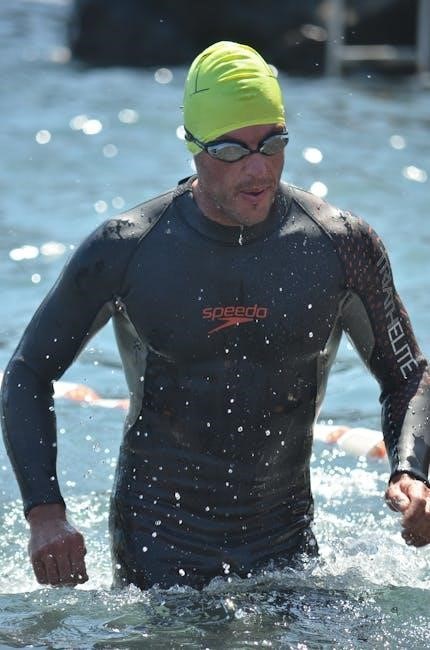
The final four weeks prioritize race-specific preparation and crucial tapering. Incorporate a full or near-full distance race simulation – swim 1.5km, bike 40km, and run 10km – to practice pacing, transitions, and nutrition. This builds confidence and identifies areas for improvement. Following the simulation, begin a gradual reduction in training volume (tapering).
Reduce swim, bike, and run distances by 20-30% each week, maintaining intensity initially. The goal is to arrive at race day feeling fresh and recovered, not fatigued. Focus on sleep, nutrition, and mental preparation. Avoid trying anything new during the taper. Trust your training and visualize success!
Run Training (Weeks 1-16)
Consistent running is key! This plan builds a solid base, incorporates speed work, and culminates in race-pace efforts for optimal performance.
Establishing a Running Base (Weeks 1-4)
The initial four weeks focus on building a robust running foundation. This phase prioritizes consistent, easy-paced running to increase mileage gradually and minimize injury risk. Begin with three runs per week, incorporating a long run that progressively increases in distance. Focus on conversational pace – you should be able to hold a conversation comfortably while running.
Include short, easy recovery runs to promote blood flow and muscle recovery. Strength training, particularly exercises targeting core and leg muscles, is crucial during this phase to support proper running form and prevent imbalances. Avoid intense interval work or speed sessions; the goal is adaptation, not peak performance. Listen to your body and prioritize rest when needed. Proper warm-up and cool-down routines are essential for injury prevention.
Interval Training & Tempo Runs (Weeks 5-8)
Weeks five through eight introduce intensity to your running program. This phase incorporates interval training – short bursts of fast running interspersed with recovery periods – to improve speed and cardiovascular fitness. Begin with shorter intervals and gradually increase duration and reduce recovery time. Tempo runs, sustained efforts at a comfortably hard pace, build lactate threshold and endurance.
Include one interval session and one tempo run per week, alongside your easy runs and long run. Maintain consistent mileage, but prioritize quality over quantity. Continue strength training to support increased intensity. Pay close attention to your body and adjust the workload if needed. Proper warm-up and cool-down are vital before and after each intense session.
Long Runs & Race Pace Work (Weeks 9-12)
This phase focuses on building endurance and simulating race conditions. Gradually increase your long run distance each week, peaking around 90-120 minutes. Introduce race pace segments within your long runs to familiarize yourself with the target speed. These segments should be sustained efforts, mimicking the demands of the Olympic distance run leg.
Incorporate brick workouts – bike followed immediately by a run – to practice the transition and running on tired legs. Maintain consistent weekly mileage, but prioritize the quality of your long runs and race pace work. Continue strength training and focus on recovery. Listen to your body and adjust the plan as needed to avoid overtraining.
Run Tapering Strategies (Weeks 13-16)
The final four weeks prioritize recovery and maintaining fitness. Reduce your overall running volume by 20-30% each week, while preserving intensity. Continue short, sharp interval sessions early in the taper to maintain leg speed, but decrease the number of repetitions. Focus on quality over quantity.
Long runs should be significantly shortened, with the final long run being no more than 60 minutes. Prioritize sleep, nutrition, and hydration. Active recovery, like easy jogging or swimming, is beneficial. Avoid any strenuous activity that could lead to injury. Trust your training and arrive at the start line feeling fresh and prepared!
Strength & Conditioning
Enhance performance and prevent injuries! Incorporate core and full-body strength training twice weekly, focusing on functional movements to support triathlon-specific demands.
Core Strength Exercises
A robust core is fundamental for efficient triathlon performance. Focus on exercises that stabilize the spine and transfer power between your upper and lower body. Include planks (front, side, and with variations), holding each for 30-60 seconds, repeating 3-4 times. Russian twists, utilizing a medicine ball or weight plate, target obliques – perform 3 sets of 15-20 repetitions.
Bird-dogs improve stability and coordination; aim for 3 sets of 10-12 repetitions per side. Dead bugs challenge core control while minimizing lower back strain – 3 sets of 10-12 repetitions. Integrate these exercises 2-3 times per week, progressively increasing difficulty by adding resistance or complexity. Remember proper form is crucial to avoid injury and maximize effectiveness.
Full Body Strength Training
Complementing core work, full-body strength builds overall power and resilience; Incorporate squats (bodyweight, goblet, or barbell) for leg strength – 3 sets of 8-12 repetitions. Lunges (forward, reverse, or walking) enhance unilateral strength and balance; perform 3 sets of 10-12 repetitions per leg.
Push-ups develop upper body pushing strength – aim for 3 sets to failure. Pull-ups (or lat pulldowns) build pulling strength; 3 sets of as many repetitions as possible. Dumbbell rows target back muscles – 3 sets of 8-12 repetitions per arm. Perform these exercises 2 times per week, allowing for adequate recovery between sessions. Prioritize controlled movements and proper form to prevent injuries.
Nutrition & Recovery
Optimal fueling and recovery are crucial! Prioritize carbohydrate intake for energy, protein for muscle repair, and consistent hydration throughout this demanding 16-week plan.
Fueling for Training & Racing
Strategic nutrition is paramount during this 16-week Olympic triathlon plan. Carbohydrates are your primary fuel source, especially during higher-intensity sessions and the race itself. Focus on complex carbohydrates like whole grains, fruits, and vegetables for sustained energy release. Protein intake is vital for muscle repair and recovery, aiming for consistent consumption throughout the day.
Prioritize pre-training and pre-race meals that are easily digestible and carbohydrate-rich. During longer workouts exceeding 90 minutes, consider incorporating easily digestible carbohydrates like gels or chews to maintain energy levels. Post-workout nutrition should focus on replenishing glycogen stores and repairing muscle tissue with a combination of carbohydrates and protein. Experiment with different fueling strategies during training to determine what works best for your body, avoiding any surprises on race day. Remember, consistent and mindful fueling will significantly enhance performance and recovery.
Importance of Hydration
Maintaining optimal hydration is non-negotiable throughout this 16-week Olympic triathlon training plan. Dehydration significantly impacts performance, leading to fatigue, muscle cramps, and reduced cognitive function. Begin hydrating well before training sessions, not just when you feel thirsty. Water is essential, but for longer or more intense workouts, consider electrolyte drinks to replace lost sodium and other minerals.
Develop a hydration strategy for both training and racing, factoring in weather conditions and sweat rate. Regularly monitor urine color – pale yellow indicates adequate hydration. During the race, utilize aid stations strategically to replenish fluids. Practice your race-day hydration plan during brick workouts to ensure your stomach can tolerate the intake. Consistent hydration supports optimal physiological function and maximizes your potential.
Active Recovery Techniques
Integrating active recovery is crucial within this 16-week Olympic triathlon plan to mitigate muscle soreness and accelerate recovery. Unlike complete rest, active recovery involves low-intensity activities that promote blood flow and nutrient delivery to fatigued muscles. Examples include easy spinning on a bike, gentle swimming, or a leisurely walk. These activities help flush out metabolic waste products, reducing stiffness and promoting healing.
Foam rolling and stretching are also valuable active recovery tools. Focus on major muscle groups used in swimming, cycling, and running. Prioritize sleep – aim for 7-9 hours nightly – as it’s when the body performs most of its repair work. Listen to your body and adjust recovery strategies based on individual needs. Proper recovery prevents overtraining and ensures consistent progress.

Monitoring Progress & Adjustments
Regularly track training load and be alert for overtraining signs. Adapt the 16-week plan based on your body’s response and performance metrics.
Tracking Training Load
Consistent monitoring of your training load is crucial for success and injury prevention throughout this 16-week Olympic triathlon plan. Utilize a training log – whether digital or paper – to record each workout’s duration, intensity, and perceived exertion. Consider employing metrics like Training Stress Score (TSS) or simply tracking weekly mileage across swim, bike, and run disciplines.
Pay attention to cumulative fatigue; a sudden spike in volume or intensity without adequate recovery can lead to overtraining. Regularly assess your resting heart rate and heart rate variability (HRV) as indicators of stress and recovery. Analyzing these data points allows for informed adjustments to the plan, ensuring you’re progressing optimally without pushing beyond your body’s capacity. Remember, consistency and smart training trump sheer volume.
Recognizing Overtraining
Overtraining is a significant risk during intense preparation like this 16-week Olympic triathlon plan. Be vigilant for warning signs beyond simple fatigue. These include persistent muscle soreness, decreased performance despite continued effort, increased resting heart rate, sleep disturbances, and a weakened immune system – frequent colds or infections.
Psychological symptoms like irritability, loss of motivation, and difficulty concentrating are also red flags. Ignoring these signals can lead to injury or burnout. If you suspect overtraining, immediately reduce your training volume and intensity. Prioritize rest, nutrition, and active recovery. Consulting with a coach or medical professional is advisable to rule out other underlying issues and ensure a safe return to training.
Plan Flexibility & Adaptation
This 16-week Olympic triathlon plan serves as a guide, not a rigid decree. Life happens, and unexpected events – illness, travel, or work commitments – may disrupt your schedule. Don’t panic! The key is adaptation. If you miss a workout, don’t try to cram it in later; simply adjust the week’s volume accordingly.
Listen to your body. If you’re consistently struggling with the prescribed intensity, reduce it. Conversely, if you’re feeling strong, cautiously increase the workload. Regularly assess your progress and make modifications based on your individual response. Remember, consistency is more important than perfection. A flexible approach ensures long-term adherence and minimizes the risk of burnout.