Greenworks Power Washer Manual: A Comprehensive Guide
This manual provides detailed instructions for Greenworks pressure washers‚ including models GPW1900 and GPW2003.
It covers safety‚ assembly‚ operation‚ maintenance‚ and troubleshooting for optimal cleaning performance.
Greenworks offers a range of electric pressure washers designed for various cleaning tasks around your home. From light-duty cleaning of patio furniture and grills to more demanding jobs like driveways and decks‚ Greenworks provides effective solutions.
Models like the GPW1900 (1900 PSI‚ 1.2 GPM) and GPW2003 (2000 PSI‚ 1.2 GPM) utilize powerful 13-amp motors and axial cam pumps.
These compact and lightweight washers feature convenient features like tangle-free hoses‚ integrated soap applicators‚ and GFCI plugs for enhanced safety‚ making cleaning easier and more efficient.
Understanding Your Greenworks Model
Your Greenworks power washer‚ whether a GPW1900 or GPW2003‚ is engineered for effective cleaning. The GPW1900 delivers up to 1900 PSI at 1.2 GPM‚ ideal for lighter tasks. The GPW2003 boosts performance to 2000 PSI at the same 1.2 GPM flow rate‚ tackling tougher grime. Both models feature a compact design‚ telescoping handles for easy maneuverability‚ and onboard storage for accessories. Familiarizing yourself with these features will maximize your cleaning efficiency and ensure safe operation.
Identifying Key Components (GPW1900‚ GPW2003)
Both the GPW1900 and GPW2003 share core components: a 13-amp universal motor‚ axial cam pump‚ a 20-ft tangle-free hose‚ and a 35-ft power cord with GFCI plug. Key differences lie in the frame design – the GPW2003 features an open frame. Both include quick-connect nozzles (25° and 40°) and a soap applicator. Understanding these parts – from the motor to the integrated soap dispenser – is crucial for proper assembly and maintenance.
Voltage Platforms and PowerHUB Integration
Greenworks utilizes versatile voltage platforms‚ enhancing compatibility across tools. The PowerHUB system allows integration with various power sources – the utility grid‚ solar panels‚ or even a generator – offering flexible operation. This innovative approach provides portable power for every job‚ maximizing convenience and reducing reliance on traditional power outlets. Explore available voltage options to optimize performance and sustainability with your Greenworks power washer.

Safety Precautions
Prioritize safety when operating your Greenworks power washer. Always utilize a GFCI plug for electrical safety‚ as it automatically shuts off power‚ protecting both you and your home. Avoid damaging the unit by following proper usage guidelines. Never point the wand at yourself or others. Ensure secure connections for the hose and nozzles. Read the entire manual before operation to understand all safety warnings and instructions.
Electrical Safety & GFCI Plug Information
Greenworks power washers feature an integrated GFCI (Ground Fault Circuit Interrupter) plug‚ a crucial safety component. This device immediately cuts off electrical power if a ground fault is detected‚ preventing potential shock hazards. Always inspect the power cord for damage before each use. Never use an extension cord unless absolutely necessary‚ and ensure it’s rated for outdoor use and the amperage of the washer.

Proper Usage and Avoiding Damage
To ensure longevity‚ avoid continuous operation exceeding the recommended duty cycle. Never point the high-pressure spray at yourself or others. Maintain a safe distance from electrical outlets and sensitive electronics. Do not use abrasive cleaners or chemicals not specifically designed for pressure washers. Store the unit indoors‚ protected from freezing temperatures‚ to prevent damage to the pump and hoses.
Assembly Instructions
Before operation‚ carefully assemble your Greenworks power washer. Begin by securely attaching the 20-ft tangle-free hose to both the unit and the spray gun using the quick-connect coupler. Next‚ select the appropriate nozzle – 25° or 40° – and firmly attach it to the spray wand. Ensure all connections are tight to prevent leaks during operation. Proper assembly is crucial for safe and effective cleaning.

Attaching the Hose (20-ft Tangle-Free Hose)
Connect the included 20-ft tangle-free hose to the Greenworks power washer’s designated outlet. Then‚ securely attach the other end to the spray gun‚ utilizing the quick-connect fitting for ease of use. Verify a snug fit at both ends to prevent water leakage during operation. This hose is designed to minimize kinks and twists‚ providing uninterrupted water flow for efficient cleaning tasks.

Connecting Nozzles (25° and 40° Nozzles)
Attach the desired nozzle – either the 25° or 40° option – to the spray gun’s quick-connect coupler. Ensure the nozzle clicks securely into place. The 25° nozzle delivers a more concentrated spray for stubborn dirt‚ while the 40° nozzle provides a wider fan for general cleaning. Regularly check the nozzle connection before each use to maintain optimal pressure and prevent accidental disconnections during operation;
Operating Instructions
Before starting‚ ensure all connections are secure and the power washer is on a stable surface. Plug the GFCI-protected power cord into a grounded outlet. Turn the power switch to the “ON” position. To shut down‚ switch the power off and disconnect the power cord. Always release the trigger before turning the unit off to relieve pressure. Adjust the pressure settings as needed for the cleaning task‚ starting with a lower setting and increasing gradually.
Powering On and Shutting Down
To power on‚ connect the 35-ft power cord with the integrated GFCI plug to a grounded outlet. Ensure the power switch is in the “OFF” position before plugging in. Then‚ flip the switch to “ON”. For shutdown‚ always release the trigger gun to relieve pressure. Turn the power switch to “OFF” and unplug the unit. Never disconnect while pressurized‚ as this could cause damage or injury.
Adjusting Pressure Settings
Greenworks power washers‚ like the GPW1900 and GPW2003‚ don’t typically feature adjustable pressure knobs. Pressure is primarily controlled by selecting different nozzles – 25° for wider‚ less intense cleaning‚ and 40° for more focused power. Varying the distance from the surface also impacts cleaning intensity. Always test on an inconspicuous area first to determine the optimal setting for delicate surfaces‚ preventing damage.

Using the Soap Applicator
The Greenworks soap applicator allows for efficient detergent application during cleaning. Simply fill the onboard soap reservoir with a pressure washer-specific detergent. Attach the soap applicator nozzle (included with models like the GPW1900 and GPW2003). The unit automatically draws soap when the trigger is pressed‚ ensuring optimal cleaning. Adjust soap concentration based on the surface and soil level for best results‚ rinsing thoroughly afterward.
Filling the Soap Reservoir
Locate the onboard soap reservoir on your Greenworks pressure washer (GPW1900‚ GPW2003). Carefully remove the cap and fill with a pressure washer-approved detergent – avoid household cleaners. Do not overfill; leave some space for expansion. Ensure the detergent is compatible with the surfaces you intend to clean. Replace the cap securely before operation to prevent leaks and maintain consistent soap application during the cleaning process.
Applying Soap for Optimal Cleaning
After filling the reservoir‚ select the soap applicator nozzle (typically a black-colored nozzle). Ensure the pressure setting is appropriate for the surface – lower pressure is generally best. Pull the trigger to dispense soap‚ working from bottom to top for even coverage. Allow the soap to dwell for a few minutes‚ but don’t let it dry. Rinse thoroughly with a clean water nozzle to remove all soap residue‚ achieving a complete and spotless clean.
Maintenance and Care
Regular maintenance ensures your Greenworks power washer’s longevity and performance. After each use‚ flush the soap reservoir with clean water. Periodically clean nozzles with a pin to remove debris‚ ensuring optimal spray patterns. Store the unit in a dry‚ frost-free location. Inspect the hose for damage and store it neatly. Avoid harsh chemicals or abrasive cleaners when cleaning the exterior of the power washer itself‚ preserving its finish.
Cleaning the Nozzles
Clogged nozzles significantly reduce cleaning effectiveness. To clean‚ disconnect the nozzle and inspect the orifice for debris. Use a thin wire‚ like a pin or needle‚ to carefully clear any blockages – avoid enlarging the opening. Rinse the nozzle thoroughly with water after cleaning to ensure all particles are removed. Regularly cleaning your nozzles maintains consistent pressure and spray patterns‚ maximizing your Greenworks power washer’s cleaning power.
Storing Your Power Washer
Proper storage extends the life of your Greenworks power washer. Before storing‚ disconnect the hose and power cord. Drain all water from the pump and hose to prevent freezing and corrosion. Store the unit in a clean‚ dry location‚ protected from extreme temperatures and direct sunlight. Utilize the onboard accessory storage for nozzles and applicators. Ensure the power cord is neatly coiled to avoid damage during storage.
Troubleshooting Common Issues
Addressing issues promptly ensures continued performance. For low pressure‚ check for kinks in the hose‚ clogged nozzles‚ or insufficient water supply. If the motor doesn’t start‚ verify the GFCI plug is functioning and the power cord is securely connected. Ensure the unit is properly assembled and the safety lock is disengaged. Consult the full manual for detailed diagnostics and potential solutions to common operational problems.
Low Pressure Problems
Reduced pressure often stems from simple causes. First‚ inspect the high-pressure hose for any kinks or obstructions hindering water flow. Next‚ thoroughly clean both the 25° and 40° nozzles‚ removing mineral deposits or debris. Confirm an adequate water supply is reaching the unit; a restricted inlet impacts performance. Finally‚ verify the pressure setting is appropriately adjusted for the cleaning task at hand‚ maximizing output.
Motor Not Starting
If the motor fails to start‚ first ensure a properly grounded GFCI outlet is providing power. Check the 35-ft power cord for damage and confirm it’s securely connected. Verify the unit’s on/off switch is engaged. Inspect the water supply connection; the motor has a safety feature preventing operation without water. Finally‚ if issues persist‚ consult the warranty information or contact Greenworks customer support for assistance.

Nozzle Selection Guide
Choosing the correct nozzle is crucial for effective cleaning without damage. The 25° nozzle is ideal for moderate cleaning tasks on surfaces like patio furniture and grills. Utilize the 40° nozzle for lighter-duty cleaning‚ such as windows and vehicles. Avoid using high-pressure nozzles on delicate surfaces. Remember‚ a wider spray angle reduces pressure‚ minimizing the risk of harm to materials.
Choosing the Right Nozzle for Different Surfaces
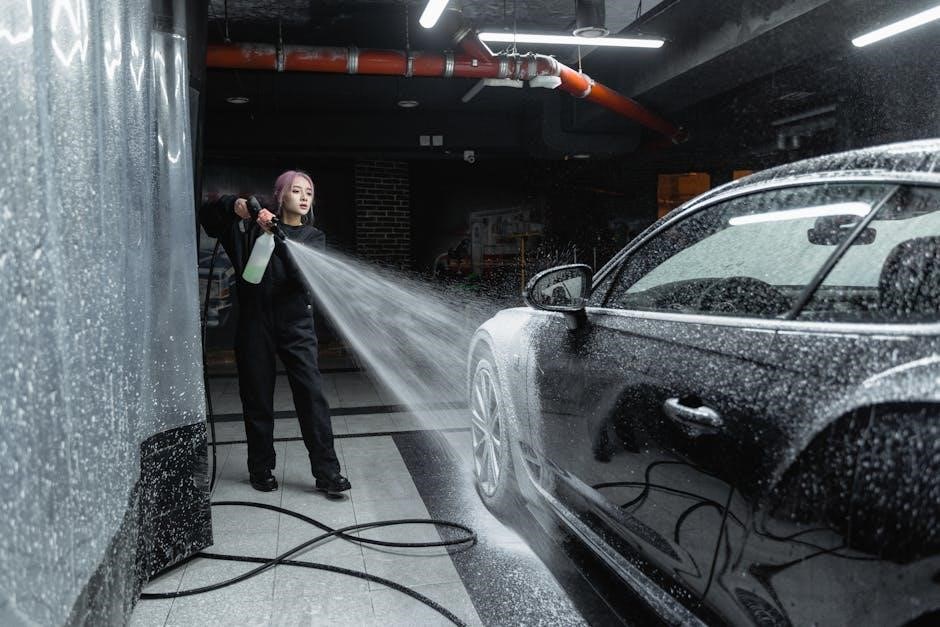
For delicate surfaces like cars‚ use the 40° nozzle to prevent damage. The 25° nozzle suits patios‚ decks‚ and siding‚ offering a balance of power and safety. Avoid the highest pressure settings on painted surfaces. Always test a small‚ inconspicuous area first. Concrete driveways benefit from the 25° nozzle‚ but stubborn stains may require a more focused approach. Remember‚ lower angles equal higher pressure – use cautiously!
Understanding PSI and GPM
PSI (pounds per square inch) measures the water’s force‚ while GPM (gallons per minute) indicates flow rate. Greenworks models range from 1700 to 2000 PSI. A 1700 PSI washer handles light tasks‚ while 1900-2000 PSI tackles tougher grime. The consistent 1.2 GPM flow rate ensures efficient cleaning without excessive water usage. Higher PSI doesn’t always mean better cleaning; GPM is crucial for rinsing away debris effectively.
What do 1700 PSI‚ 1900 PSI‚ and 2000 PSI mean?
PSI‚ or pounds per square inch‚ defines the water pressure delivered by the Greenworks power washer. 1700 PSI is ideal for delicate surfaces like windows and patio furniture. Stepping up to 1900 PSI effectively cleans vehicles and grills. The 2000 PSI model‚ like the GPW2003‚ provides robust power for driveways and heavily soiled areas.
Higher numbers indicate greater cleaning force‚ but nozzle selection is key to prevent damage.
The Significance of 1.2 GPM Flow Rate
GPM‚ or gallons per minute‚ measures the volume of water the Greenworks power washer uses. A 1.2 GPM flow rate balances cleaning power with water conservation. This rate is efficient for common tasks like car washing‚ deck cleaning‚ and fence restoration. It prevents excessive water usage while still delivering sufficient force to remove dirt and grime.
Combined with PSI‚ GPM determines overall cleaning effectiveness.
Greenworks Power Washer Specifications

Greenworks offers various power washer models with differing specifications. The GPW1900 delivers up to 1900 PSI at 1.2 GPM‚ powered by a 13-amp motor. The GPW2003 provides 2000 PSI at the same 1.2 GPM flow rate‚ also utilizing a 13-amp motor. Both feature a 20-ft tangle-free hose and a 35-ft power cord with GFCI protection‚ ensuring safe and convenient operation for diverse cleaning needs.
GPW1900 Detailed Specifications
The Greenworks GPW1900 boasts a maximum pressure of 1900 PSI with a flow rate of 1.2 GPM. It’s powered by a 13-amp universal motor and features an axial cam pump. This model includes a 20-foot tangle-free hose‚ a 35-foot power cord with GFCI‚ and quick-connect nozzles (25° and 40°). Designed for light to medium-duty tasks like cleaning vehicles and patios‚ it offers convenient onboard accessory storage.
GPW2003 Detailed Specifications
The Greenworks GPW2003 delivers 2000 PSI at 1.2 GPM‚ utilizing a 13-amp motor and axial cam pump. This open-frame pressure washer features a 20-ft tangle-free hose and a 35-ft power cord equipped with GFCI protection. It includes quick-connect nozzles (25° and 40°) and a soap applicator for versatile cleaning. Greenworks emphasizes sustainability‚ designing this model for family use and a better future.
Warranty Information
Greenworks stands behind its power washers with a commitment to quality and customer satisfaction. Specific warranty details for the GPW1900 and GPW2003 models vary‚ but generally cover defects in materials and workmanship. It’s crucial to register your product online to activate the warranty. Retain your proof of purchase for warranty claims. Contact Greenworks customer support for complete warranty terms and conditions‚ ensuring a hassle-free experience.
Customer Support and Resources
Greenworks offers extensive customer support for its power washers. Visit the official Greenworks website for FAQs‚ downloadable manuals‚ and troubleshooting guides. A dedicated customer service team is available via phone and email to assist with any questions or concerns. Online resources include parts diagrams and how-to videos. Explore the Greenworks community forum for peer-to-peer support and shared experiences‚ ensuring you have all the help needed.

Sustainability and Greenworks Commitment
Greenworks is dedicated to sustainability‚ designing products for a better future. Their electric power washers reduce emissions compared to gas-powered alternatives‚ promoting a cleaner environment. The company integrates with renewable energy sources like solar panels via the PowerHUB system. Greenworks prioritizes eco-friendly practices throughout its manufacturing process‚ demonstrating a commitment to responsible innovation and a sustainable lifestyle for families.